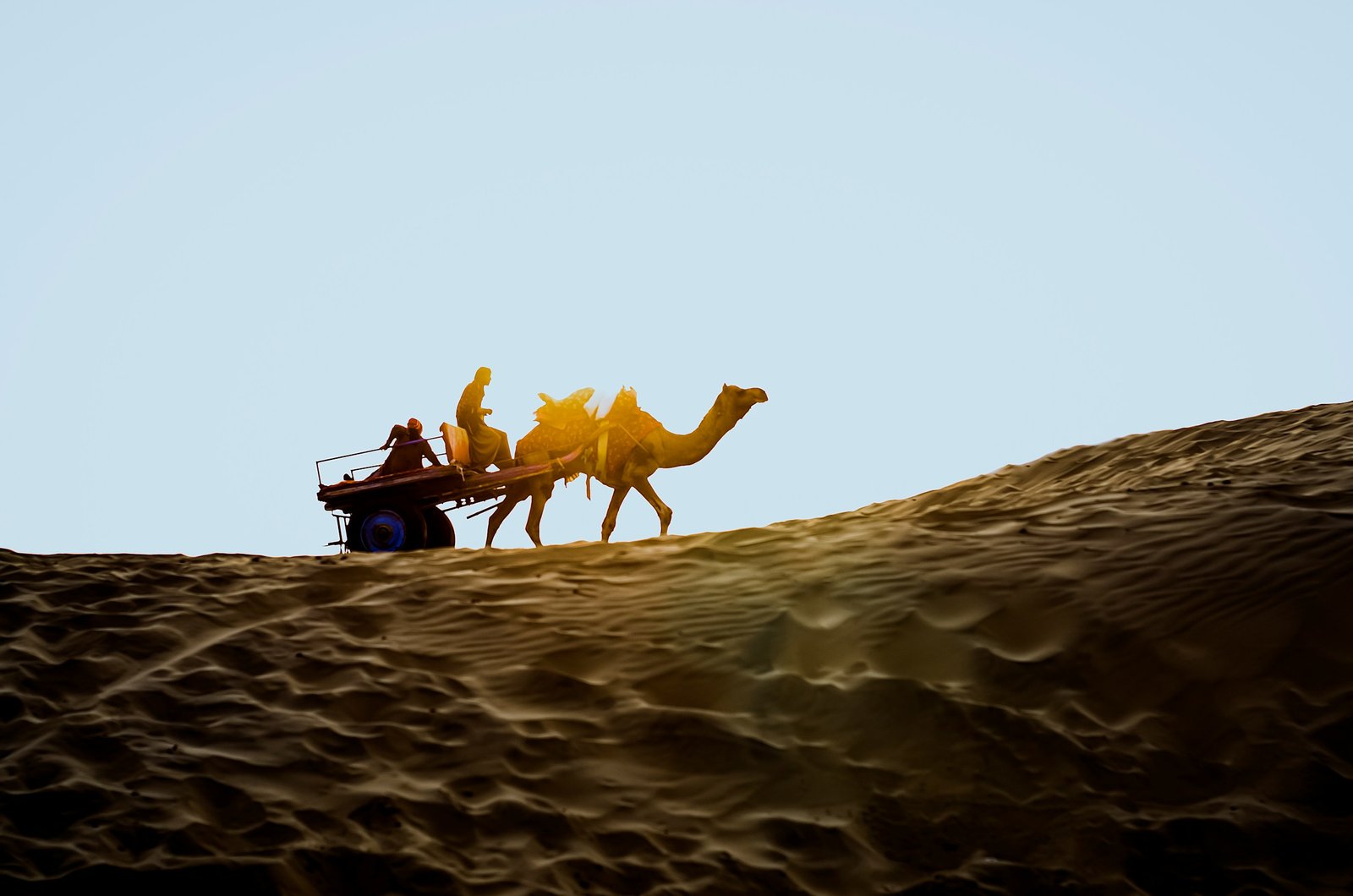
Discover golden forts, intricately carved havelis, sweeping sand dunes, camel safaris and unforgettable sunsets in the heart of the Thar Desert.
Jaisalmer is one of Rajasthan’s most distinctive tourist destinations. Known as the Golden City, it is admired for its yellow-sandstone architecture, historic fort, intricately carved havelis, desert villages, camel safaris and sweeping landscapes of the Thar Desert.
The city’s main landmark is Jaisalmer Fort, also called Sonar Qila or the Golden Fort. Unlike many historic forts that function only as monuments, Jaisalmer Fort remains a living heritage area containing homes, temples, shops, cafés and guesthouses.
Beyond the fort, visitors can explore Patwon Ki Haveli, Nathmal Ki Haveli, Salim Singh Ki Haveli, Gadisar Lake, Bada Bagh and Vyas Chhatri. The desert region outside the city offers camel safaris, jeep safaris, cultural performances, stargazing and overnight camp stays.
Jaisalmer is ideal for families, couples, honeymoon travellers, groups of friends, photographers, heritage lovers and visitors planning a longer Rajasthan road trip. A stay of at least two nights is recommended to experience both the historic city and the desert.
Jaisalmer was founded in 1156 by Rawal Jaisal, a Bhati Rajput ruler. He established the city and fort on Trikuta Hill after shifting his capital from the nearby settlement of Lodurva.
The city developed along important trading routes connecting India with regions further west. Merchants dealing in silk, spices, precious stones and other valuable goods contributed to Jaisalmer’s prosperity. Wealthy trading families constructed grand havelis with carved façades, balconies, courtyards and decorative interiors.
Jaisalmer Fort became the political and defensive centre of the kingdom. Its elevated position provided wide views of the surrounding desert and helped protect the settlement.
Changes in trading patterns later reduced the city’s commercial importance. However, its strategic location near India’s western border and the growth of tourism created new opportunities.
Today, Jaisalmer is celebrated for its living fort, traditional architecture, desert communities, folk music, handicrafts and distinctive golden landscape.
Jaisalmer Fort is the city’s most important attraction. Built from yellow sandstone, the fort appears golden during sunrise and sunset. It stands prominently on Trikuta Hill and provides panoramic views of the surrounding city.
Inside the fort, visitors can explore narrow lanes, traditional homes, temples, shops, cafés and viewpoints. As people continue to live and work inside the fort, travellers should respect private areas and avoid blocking residential lanes.
The Jain Temples inside Jaisalmer Fort are known for their detailed carvings, domes, pillars and religious artwork. The temples were constructed from yellow sandstone and represent the exceptional craftsmanship of local artisans.
Visitors should dress respectfully, remove footwear where required and follow the temple’s photography rules.
The palace section of Jaisalmer Fort contains royal rooms, balconies, courtyards and museum displays. Visitors can learn about the former rulers of Jaisalmer while enjoying elevated views across the Golden City.
Patwon Ki Haveli is a group of five grand mansions constructed by a wealthy merchant family. Its carved windows, ornamental balconies, detailed stonework and decorated rooms make it one of Jaisalmer’s finest architectural attractions.
Different sections may have separate entry arrangements. Visitors should confirm which portion of the complex is included with their ticket.
Nathmal Ki Haveli is known for its detailed yellow-sandstone façade, carved elephants, balconies and decorative artwork. Parts of the haveli remain privately occupied, so visitors should follow local access restrictions.
Salim Singh Ki Haveli is recognised for its unusual upper structure, projecting balconies and peacock-inspired design. It offers another interesting example of the architecture created by Jaisalmer’s influential merchant and administrative families.
Gadisar Lake is a scenic reservoir surrounded by temples, shrines, ghats and traditional gateways. It was historically an important source of water for the city.
Visitors can enjoy a peaceful walk around the lake or take a boat ride when services are operating. Early morning and sunset are generally the most attractive times for photography.
Bada Bagh is a historic complex of royal cenotaphs situated outside the main city. Its sandstone chhatris stand against the open desert landscape and create beautiful views during sunrise and sunset.
Visitors should check current access and photography rules before planning professional or commercial shoots.
Vyas Chhatri contains a collection of sandstone cenotaphs constructed in traditional Rajasthani style. Its elevated position provides attractive views of Jaisalmer Fort and the surrounding city.
The site is particularly popular around sunset.
Kuldhara is a historic abandoned settlement situated approximately 18 kilometres from Jaisalmer. The remains of houses, streets, temples and community structures provide an interesting glimpse into the region’s former village life.
Several legends are associated with the village, but visitors should distinguish local folklore from documented history. Kuldhara can be included while travelling between Jaisalmer city and the desert camps.
Sam Sand Dunes are approximately 40–45 kilometres from Jaisalmer and form the centre of the region’s desert tourism activities. Visitors come here for camel safaris, jeep safaris, sunset views, cultural performances and overnight camp stays.
The area can become crowded during peak season. Travellers seeking a quieter experience should discuss alternative dune locations with their tour operator.
Khuri is another desert destination outside Jaisalmer. It generally offers a quieter and more village-oriented experience than the busier Sam Sand Dunes area.
Camel rides, sunset visits and overnight stays may be arranged through local camps and guesthouses.
Desert National Park protects an important section of the Thar Desert ecosystem. Its landscape includes sand dunes, rocky formations, grasslands and seasonal water bodies.
The park supports desert wildlife and bird species, including the critically endangered Great Indian Bustard. Wildlife sightings are never guaranteed, and visitors should avoid disturbing animals or leaving waste behind.
Akal Wood Fossil Park is located approximately 17 kilometres from Jaisalmer. It preserves fossilised wood and geological remains that offer evidence of the region’s prehistoric environment.
The site is particularly interesting for families, students, geology enthusiasts and travellers looking for an attraction beyond forts and havelis.
Lodurva was the former capital of the Bhati rulers before Jaisalmer was established. The area is known for its beautifully carved Jain temple and peaceful desert surroundings.
It can be combined with Amar Sagar, Bada Bagh or another attraction outside the city.
Amar Sagar is a historic lake and palace complex located outside Jaisalmer. The area contains pavilions, carved structures and a Jain temple. It is suitable for travellers interested in quiet heritage locations and sunset photography.
A camel safari is one of Jaisalmer’s signature desert experiences. Short rides are suitable for families and first-time visitors, while longer safaris may include quieter dunes and village routes.
Confirm the safari duration, route, sunset timing and return arrangements before beginning the activity. Travellers should choose operators that treat their animals responsibly.
A jeep safari offers a faster and more adventurous way to explore the dunes. Some operators provide dune-bashing experiences, while others arrange scenic drives through desert tracks and villages.
The activity may not be suitable for pregnant travellers or people with back, neck or mobility problems.
Desert camps range from basic tents to luxury Swiss tents and cottages. Packages may include:
Traditional welcome
Camel ride
Desert sunset
Tea and snacks
Folk music
Kalbelia dance
Dinner
Overnight tent stay
Facilities vary considerably between properties. Confirm attached bathroom, hot water, cooling, heating, meal arrangements, safari duration and distance from the dunes before booking.
Sunset over the Thar Desert is one of Jaisalmer’s most memorable experiences. Arrive at the dunes early enough to find a suitable viewpoint and avoid missing the best light.
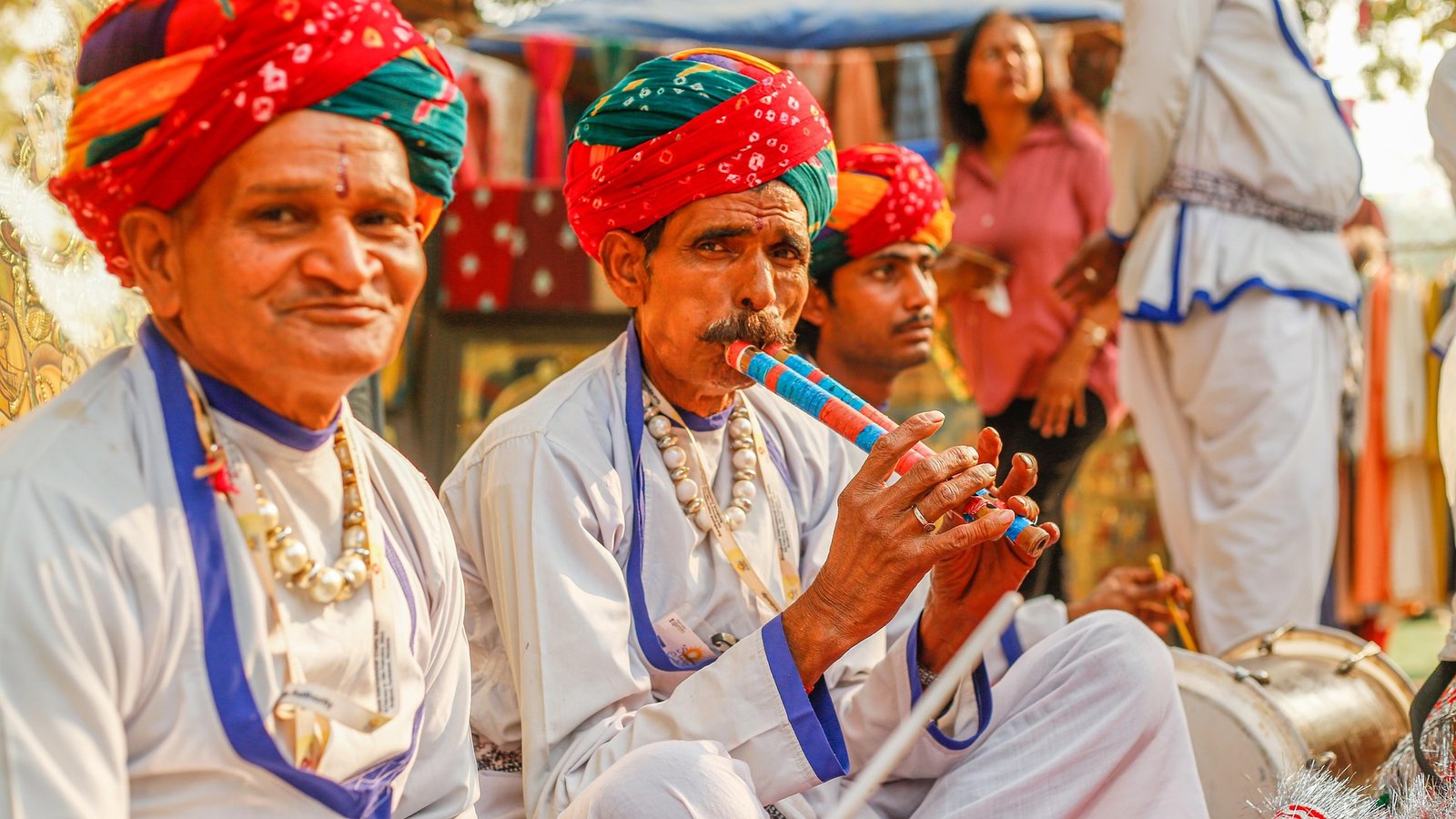
Many camps arrange evening performances featuring Manganiyar or Langa music, traditional instruments and Kalbelia dance. The quality and duration of the programme depend on the selected camp.
The open desert can offer excellent night-sky views away from city lights. Stargazing conditions depend on the weather, moon phase and exact camp location.
Walking through the lanes of Jaisalmer Fort is the best way to discover its temples, balconies, shops and viewpoints. Early morning is generally quieter than the middle of the day.
Jaisalmer’s markets are known for:
Embroidered textiles
Mirror-work fabrics
Leather products
Silver jewellery
Traditional puppets
Rugs and carpets
Decorative items
Yellow-sandstone handicrafts
Check quality and pricing carefully before purchasing expensive products.
Jaisalmer Fort, Gadisar Lake, Patwon Ki Haveli, Bada Bagh, Vyas Chhatri and the desert dunes offer excellent photography opportunities.
Always ask permission before photographing local residents, performers, private homes or restricted border areas.
Dal baati churma is one of Rajasthan’s most famous meals. It combines baked wheat baati, seasoned lentils and sweet churma. Ghee is traditionally added for extra flavour.
Ker sangri is a traditional desert preparation made using dried berries and beans that grow in Rajasthan’s arid climate. It is generally cooked with spices and served with roti.
Gatte ki sabzi consists of gram-flour dumplings cooked in a seasoned yoghurt-based gravy. It is commonly served with roti or rice.
Bajra roti is a millet flatbread usually eaten with vegetables, lentils, curd, garlic chutney or ghee. It is especially popular during the winter season.
Laal maas is a spicy Rajasthani mutton curry known for its red colour and strong chilli flavour. Travellers who prefer less spice should request a milder preparation.
Pyaz ki kachori is a crispy fried snack filled with seasoned onions and spices. It is often served with sweet and spicy chutneys.
Mirchi bada is prepared using a large chilli filled with a spiced mixture, coated in gram-flour batter and deep-fried. The level of heat can vary.
Ghotua ladoo is a traditional Jaisalmer sweet prepared using gram flour, ghee and sugar. It is a popular item to carry home from the Golden City.
Makhania lassi is a thick, sweet yoghurt drink often flavoured with saffron, cardamom or dry fruits. It can be quite rich and filling.
Choose busy and well-maintained restaurants, drink sealed or filtered water and check food hygiene before eating at street stalls.
4 Days / 3 Nights
Discover the royal heritage and desert beauty of Rajasthan with our 3 Nights 4 Days Jodhpur Jaisalmer Tour Package. Explore Jodhpur’s magnificent Mehrangarh Fort, Jaswant Thada and colourful old-city markets before travelling to Jaisalmer for an unforgettable desert camp experience. Enjoy camel safari, sunset over the dunes, cultural performances and sightseeing at Jaisalmer Fort, historic havelis and Gadisar Lake.
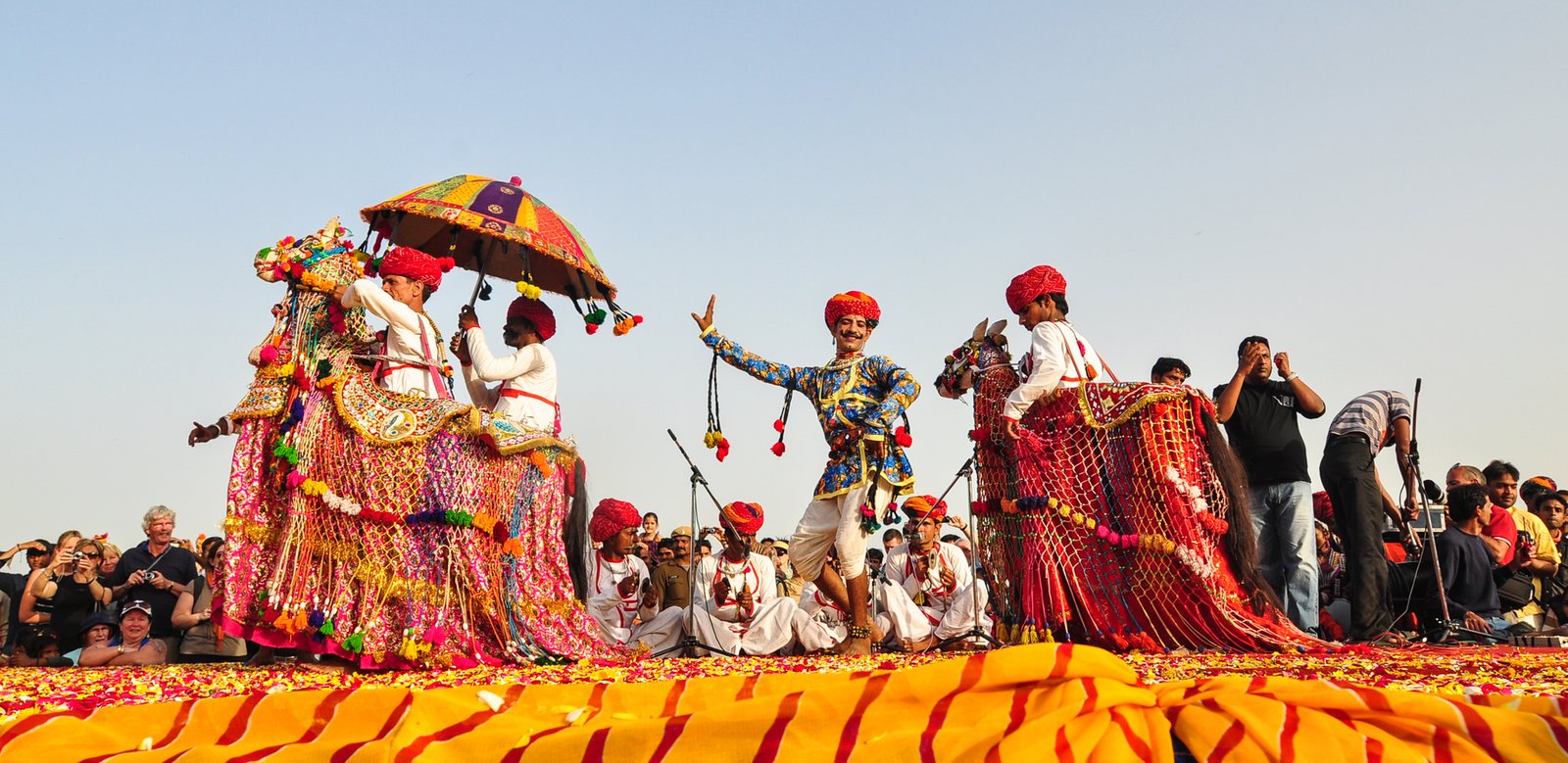 6 Days / 5 Nights
Explore the diverse beauty of Rajasthan with our Udaipur Jodhpur Jaisalmer Tour Package for 5 nights and 6 days. Discover Udaipur's beautiful lakes and palaces, experience the royal heritage of Jodhpur and enjoy an unforgettable desert camp stay in Jaisalmer.
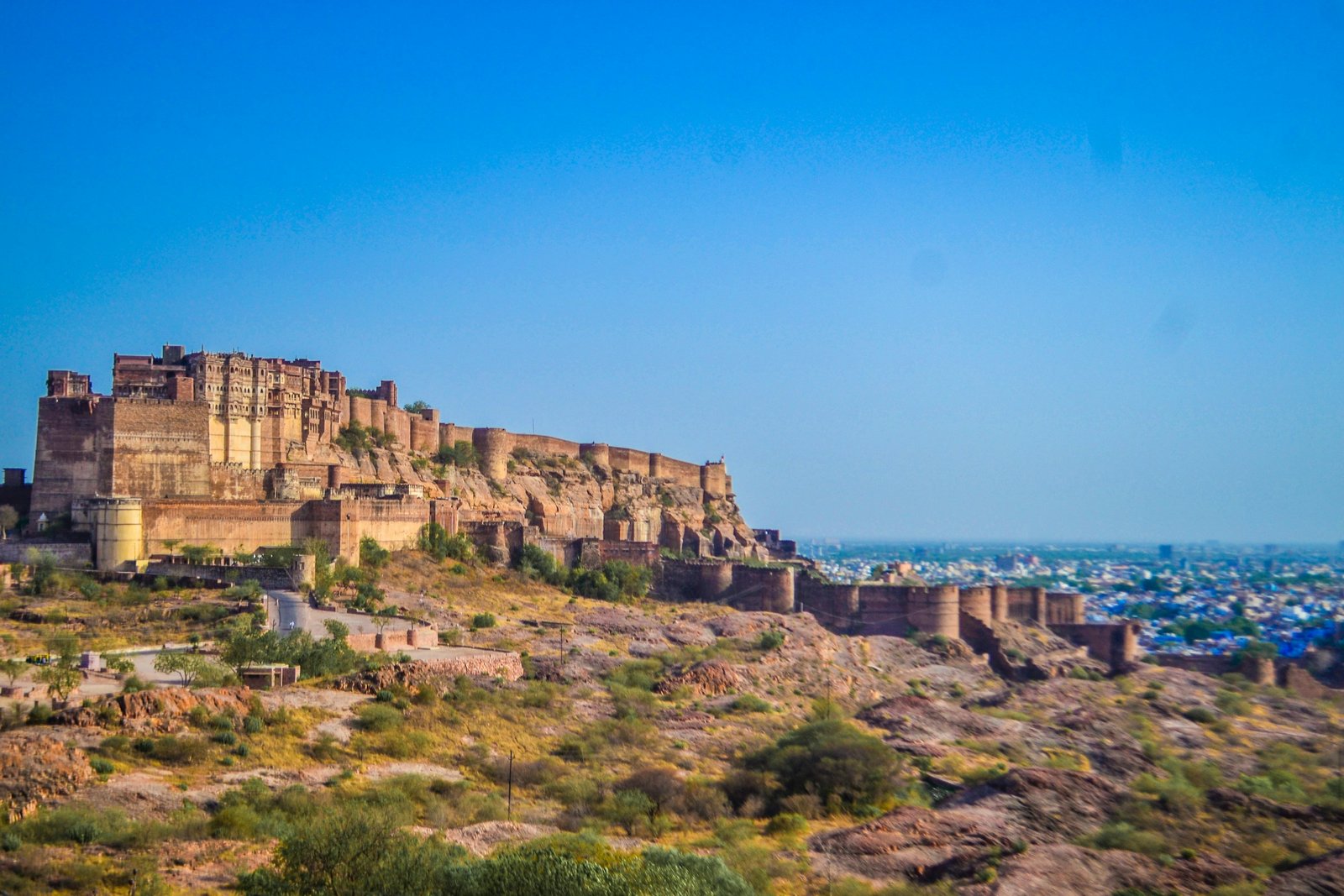 6 Days / 5 Nights
Explore Rajasthan’s royal cities, spiritual destinations and desert landscapes with our 5 Nights 6 Days Jaipur Pushkar Jodhpur Jaisalmer Tour Package. Discover Jaipur’s forts and palaces, visit Ajmer Sharif and sacred Pushkar, explore Jodhpur’s Mehrangarh Fort and experience Jaisalmer’s Golden Fort, havelis, camel safari and desert camp. The journey begins in Jaipur and concludes with a convenient drop in Jodhpur.
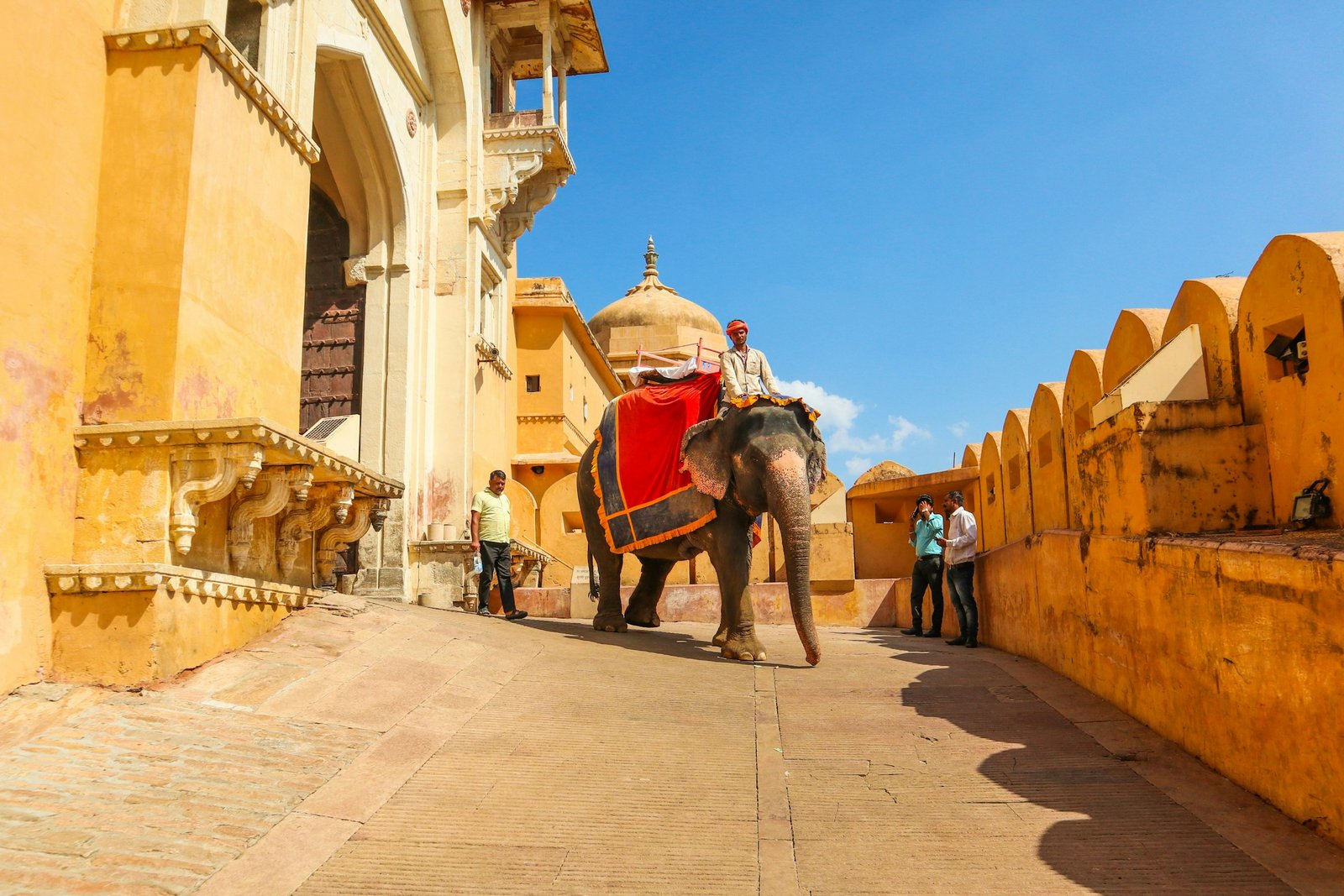 8 Days / 7 Nights
Experience Rajasthan’s royal cities, spiritual destinations, tranquil lakes and golden desert with our 7 Nights 8 Days Jaipur Udaipur Jodhpur Jaisalmer Tour Package. Explore Jaipur’s forts and palaces, visit Ajmer and Pushkar, discover Udaipur’s lakes, see Jodhpur’s Mehrangarh Fort and enjoy camel safari, cultural performances and an overnight desert camp near Jaisalmer.
 10 Days / 9 Nights
Explore Rajasthan’s royal history, magnificent forts, desert landscapes, lake palaces and spiritual destinations with our 9 Nights 10 Days Historical Rajasthan Tour Package. The journey covers Jaipur, Bikaner, Jaisalmer, Jodhpur, Kumbhalgarh, Udaipur, Ajmer and Pushkar with private sightseeing, a Jaisalmer desert camp stay and convenient Jaipur pickup and drop.
Jaisalmer is connected with major Rajasthan cities by road, rail and limited domestic flights. Travellers commonly reach the city from Jodhpur, Bikaner, Jaipur or Delhi.
Jaisalmer Airport, with airport code JSA, is the nearest airport to the city. It is located approximately 12–17 kilometres from central Jaisalmer, depending on the hotel and selected route.
The airport handles domestic passenger services, but routes and frequencies can be limited or seasonal. Travellers should check current airline schedules before finalising their hotel, camp or connecting transport.
Taxis and pre-arranged private transfers can be used between the airport, city hotels and desert camps. Pickup should preferably be confirmed before arrival.
Jodhpur Airport is the most commonly used alternative when suitable flights to Jaisalmer are unavailable. It is approximately 280–290 kilometres from Jaisalmer.
The road journey usually requires around five to six hours, depending on traffic, weather, refreshment stops and hotel location.
Jaisalmer Railway Station, with station code JSM, is the principal railway station serving the city. It has rail connections with Jodhpur, Jaipur, Delhi and selected destinations in other regions.
Train routes, operating days and departure times should be checked for the actual travel date.
Taxis and auto-rickshaws are generally available outside the station. Travellers arriving early in the morning or late at night should arrange hotel or camp pickup in advance.
Jaisalmer has road connections with Jodhpur, Bikaner, Jaipur, Barmer and other Rajasthan destinations. Government buses, private buses, taxis and tour vehicles operate on major routes.
Jodhpur to Jaisalmer: Approximately 280–290 kilometres
Bikaner to Jaisalmer: Approximately 325–335 kilometres
Barmer to Jaisalmer: Approximately 155–165 kilometres
Jaipur to Jaisalmer: Approximately 550–575 kilometres
Udaipur to Jaisalmer: Approximately 485–510 kilometres
Delhi to Jaisalmer: Approximately 750–800 kilometres
Actual travel time depends on the route, road conditions, traffic and refreshment stops.
Sam Sand Dunes are approximately 40–45 kilometres from Jaisalmer. They are known for camel rides, jeep safaris, sunsets, cultural programmes and desert camps.
Kuldhara is approximately 18 kilometres from Jaisalmer. The abandoned village can be visited while travelling between the city and Sam Sand Dunes.
Akal Wood Fossil Park is approximately 17 kilometres from Jaisalmer. It preserves fossilised wood and geological remains from the region’s prehistoric landscape.
Lodurva is approximately 15–17 kilometres from Jaisalmer. Its principal attraction is an intricately carved Jain temple surrounded by peaceful desert scenery.
Khaba Fort is situated within the desert region outside Jaisalmer. It overlooks the remains of an abandoned settlement and can be included with Kuldhara or a desert excursion.
Amar Sagar is approximately 7 kilometres from Jaisalmer. Its lake, palace complex and temple make it a convenient short excursion from the city.
Bada Bagh is approximately 6–7 kilometres from Jaisalmer and is known for royal cenotaphs constructed from golden sandstone. Sunrise and sunset provide attractive photography conditions.
Khuri is located approximately 45–50 kilometres from Jaisalmer. It is known for village life, desert scenery, camel rides and comparatively quieter dunes.
The accessible areas of Desert National Park are situated outside Jaisalmer. Visitors can explore the desert ecosystem, wildlife habitat and distinctive geological landscape through authorised arrangements.
Tanot Mata Temple is approximately 120 kilometres from Jaisalmer and is situated near India’s western border region. It is associated with local faith and the military history of the area.
The journey requires a dedicated excursion and an early departure from Jaisalmer.
Longewala War Memorial commemorates the Battle of Longewala during the 1971 India–Pakistan War. Exhibits may include military equipment, photographs and information about the battle.
Tanot Mata Temple and Longewala War Memorial are often combined in a full-day road trip.
Visits to designated border areas depend on security conditions and permission from the relevant authorities. Access is not guaranteed and may be suspended without prior notice.
Travellers must carry valid government-issued photo identification and should never photograph restricted military areas.
Pokhran is approximately 105–115 kilometres from Jaisalmer. The town is known for Pokhran Fort, desert history and its strategic importance.
Ramdevra is an important pilgrimage destination associated with Baba Ramdevji. It is located near Pokhran and can be included while travelling between Jaisalmer and Jodhpur.
A compact one-day itinerary may include:
Jaisalmer Fort
Jain Temples
Fort Palace Museum
Patwon Ki Haveli
Nathmal Ki Haveli
Salim Singh Ki Haveli
Gadisar Lake
Local market
One day is suitable for city sightseeing but does not provide enough time for a relaxed desert camp experience.
Jaisalmer Fort
Jain Temples
Fort Palace Museum
Patwon Ki Haveli
Nathmal Ki Haveli
Salim Singh Ki Haveli
Gadisar Lake
Vyas Chhatri or Bada Bagh
Jaisalmer city stay
Kuldhara Heritage Village
Desert camp check-in
Camel safari
Desert sunset
Optional jeep safari
Folk music and Kalbelia dance
Dinner at the camp
Overnight desert camp stay
Travellers with three days can add one of the following excursions:
Tanot Mata Temple and Longewala War Memorial
Desert National Park
Khuri village and dunes
Akal Wood Fossil Park and Lodurva
Pokhran and Ramdevra
October to March is generally the best period to visit Jaisalmer. The cooler weather is suitable for fort visits, desert safaris, camp stays and outdoor activities.
December and January can be cold, particularly during the night. Travellers staying in desert camps should carry warm clothing and confirm whether proper bedding or heating arrangements are available.
April to June can be extremely hot. Outdoor sightseeing should be limited to early morning and late afternoon.
The monsoon season receives limited rainfall, but humidity and high daytime temperatures may continue. Flight schedules, camps and desert activities may also be limited outside the main tourist season.
Keep at least two nights for the city and desert experience.
Confirm whether the camp is near Sam, Khuri or another dune area.
Check what is included in the camel or jeep safari package.
Ask for the exact safari duration before booking.
Confirm attached bathroom and hot-water facilities at the camp.
Carry warm clothing for winter desert evenings.
Use sunscreen, sunglasses and a hat during daytime sightseeing.
Drink sufficient water, even during winter.
Wear comfortable footwear inside the fort and havelis.
Respect residents living within Jaisalmer Fort.
Avoid littering in the dunes and protected desert areas.
Choose operators that follow responsible animal-care practices.
Carry valid photo identification for border-region excursions.
Never photograph military buildings or restricted border areas.
Confirm monument timings, entry charges and camp availability.
Keep additional time for long road journeys.
Check flight and train schedules before finalising the itinerary.
Jaisalmer combines royal history, living heritage, desert adventure and traditional culture in one unforgettable destination. From exploring the lanes of the Golden Fort to watching the sun set behind the dunes, every part of the journey reveals a different side of Rajasthan’s desert landscape.