Experience the timeless beauty of the Taj Mahal, magnificent Mughal monuments, vibrant markets and authentic flavours of Agra.
Agra is one of India’s most recognised heritage destinations and home to the magnificent Taj Mahal. Situated on the banks of the Yamuna River in Uttar Pradesh, the city attracts travellers from around the world with its Mughal monuments, historic gardens, traditional markets, marble craftsmanship and celebrated food culture.
Although the Taj Mahal is Agra’s most famous landmark, the city offers much more than a single monument. Agra Fort, Itmad-ud-Daulah, Mehtab Bagh, Akbar’s Tomb and several lesser-known structures reveal different chapters of Mughal history and architecture.
Agra forms an essential part of India’s Golden Triangle tourist circuit with Delhi and Jaipur. Its convenient road and railway connections also make it suitable for short trips from Mathura, Vrindavan, Bharatpur and Gwalior.
A full day is sufficient for visitors who only want to see the Taj Mahal and Agra Fort. However, a two-day stay provides a more comfortable experience and allows time for sunrise photography, heritage attractions, shopping, local food and nearby Fatehpur Sikri.
Agra is suitable for families, couples, school groups, international visitors, photographers, history enthusiasts and first-time travellers exploring northern India.
Agra has a long history, but it became politically important during the rule of the Delhi Sultanate. Sultan Sikandar Lodi established Agra as an important administrative centre during the early sixteenth century and shifted his capital to the city.
After the First Battle of Panipat in 1526, Babur defeated Ibrahim Lodi and established Mughal rule in northern India. Agra subsequently became an important centre of the Mughal Empire.
Emperor Akbar transformed Agra into a powerful imperial capital. He commissioned the construction of Agra Fort using red sandstone and developed Fatehpur Sikri as another royal centre outside the city.
During the reign of Emperor Jahangir, Agra continued to flourish as a centre of administration, art and garden design. Nur Jahan commissioned the tomb of her father, Mirza Ghiyas Beg, now popularly known as Itmad-ud-Daulah.
The city entered another important architectural period under Emperor Shah Jahan. He replaced and expanded several structures inside Agra Fort using white marble and commissioned the Taj Mahal in memory of his wife, Mumtaz Mahal.
Although the Mughal capital later shifted, Agra retained its cultural and architectural importance. Today, the Taj Mahal, Agra Fort and Fatehpur Sikri are recognised as UNESCO World Heritage Sites.
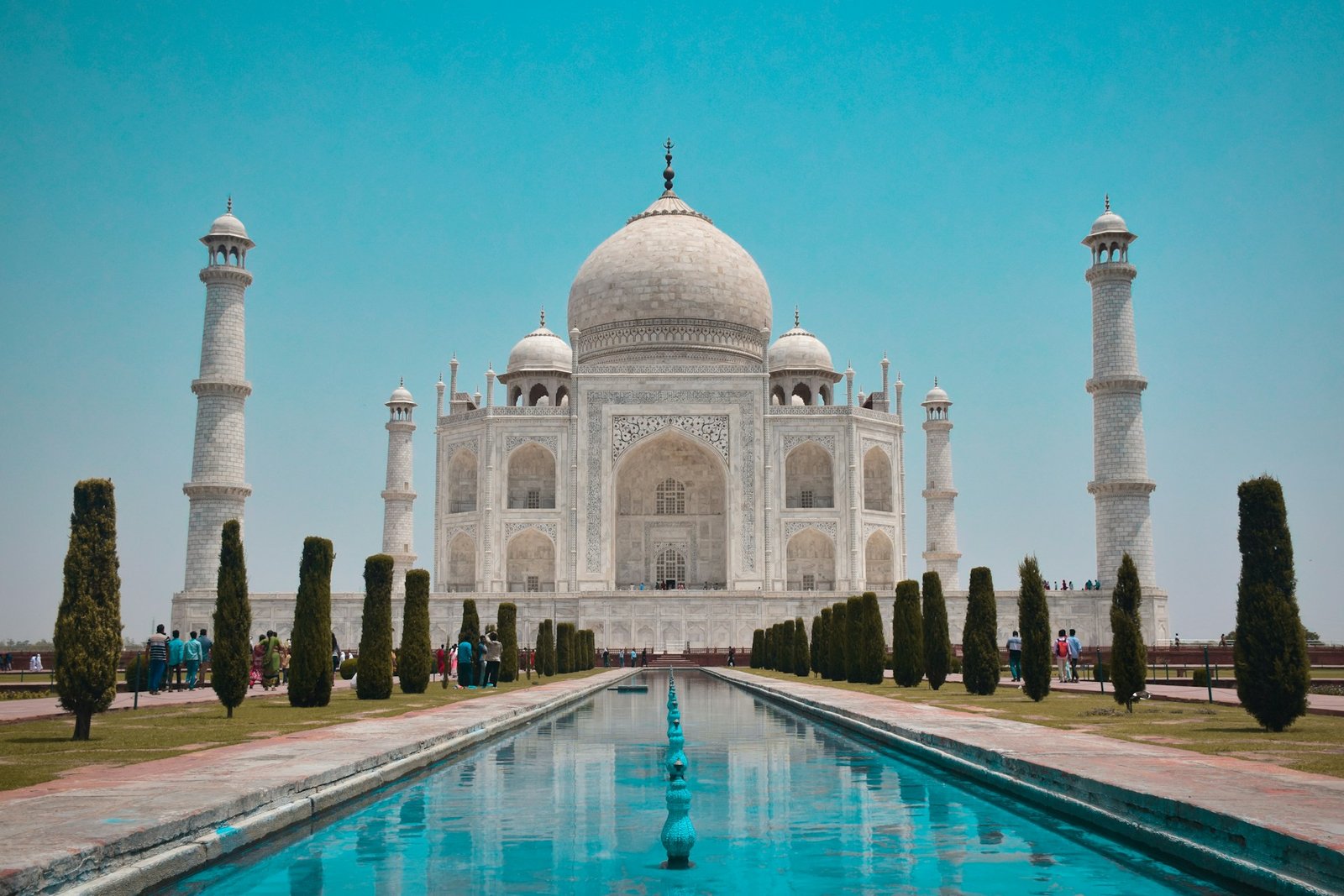
The Taj Mahal is Agra’s most famous attraction and one of the world’s finest examples of Mughal architecture. Emperor Shah Jahan commissioned the monument in memory of his wife, Mumtaz Mahal.
The complex includes the main white-marble mausoleum, gardens, water channels, gateways and supporting structures. Its detailed marble inlay work, symmetry and changing appearance under different light conditions make it especially popular among photographers.
Early morning is generally a preferred time to visit because the weather can be more comfortable and the light is softer. Security checks may take time, and several items are restricted inside the complex.
The Taj Mahal is normally closed to general visitors on Fridays. Entry rules, ticket prices and opening times should be checked before planning the visit.
Agra Fort is a massive red-sandstone fortress situated near the Yamuna River. Originally developed as an imperial stronghold under Emperor Akbar, it was expanded by later Mughal rulers.
Important sections include the Amar Singh Gate, Jahangiri Mahal, Diwan-i-Aam, Diwan-i-Khas, Musamman Burj and decorative marble palaces.
Several areas inside the fort provide distant views of the Taj Mahal. The complex is extensive, so visitors should allow enough time for walking and exploration.
The Tomb of Itmad-ud-Daulah is an elegant marble monument located on the eastern bank of the Yamuna River. It was commissioned by Nur Jahan for her father, Mirza Ghiyas Beg.
The monument is sometimes called the “Baby Taj” because of its white marble construction, delicate inlay work and balanced garden layout. It is smaller and usually quieter than the Taj Mahal, making it suitable for relaxed sightseeing and photography.
Mehtab Bagh is a historic garden located across the Yamuna River from the Taj Mahal. Its position offers a different view of the monument, particularly during the late afternoon and around sunset.
The appearance of the riverfront and monument depends on weather, visibility and seasonal conditions. Visitors should follow local access rules and remain within permitted areas.
Akbar’s Tomb is situated in Sikandra, on the outskirts of Agra. The complex combines red sandstone, marble decoration, geometric patterns and a large garden.
The monument reflects the architectural ideas associated with Emperor Akbar. Visitors may also see deer and other animals within the garden areas, but they should not feed or disturb them.
Fatehpur Sikri is a historic Mughal city located approximately 35–40 kilometres from Agra. Emperor Akbar developed it as an imperial capital during the sixteenth century.
Major attractions include Buland Darwaza, Jama Masjid, the tomb of Sheikh Salim Chishti, Diwan-i-Khas, Panch Mahal, Jodha Bai’s Palace and several courtyards.
The site involves considerable walking, and different sections may have separate access arrangements. A half-day is generally required for the road journey and sightseeing.
Jama Masjid is an important historic mosque located near Agra Fort. It was commissioned during the reign of Shah Jahan and is admired for its red-sandstone construction, marble decoration and spacious courtyard.
Visitors should wear respectful clothing, remove footwear where required and avoid entering during restricted prayer periods.
Chini Ka Rauza is the tomb of Afzal Khan, a poet and scholar who served in Shah Jahan’s court. The monument is recognised for remnants of colourful glazed-tile decoration.
It is less crowded than Agra’s major attractions and may appeal to travellers interested in architecture and lesser-known heritage sites. The condition of different sections may vary.
Located near Sikandra, the tomb of Mariam-uz-Zamani is associated with the wife of Emperor Akbar and the mother of Emperor Jahangir.
The monument combines Mughal architectural elements with red-sandstone decoration and can be included with Akbar’s Tomb when time permits.
Ram Bagh is considered one of the earliest Mughal gardens in India. It is traditionally associated with Emperor Babur and reflects the Persian-style garden tradition introduced during the early Mughal period.
The garden provides a quieter experience compared with Agra’s busier tourist monuments.
A sunrise visit offers soft light, cooler temperatures and an opportunity to experience the Taj Mahal before the busiest part of the day.
Actual visibility depends on weather, fog and seasonal conditions. Travellers should reach the entry area early and keep enough time for security checks.
A knowledgeable local guide can explain the symbolism, craftsmanship and historical background of Agra’s monuments.
Visitors should use authorised guides and confirm the service charges, language and sightseeing duration before starting the tour.
Agra provides an excellent opportunity to compare different phases of Mughal design. Red-sandstone structures at Agra Fort and Sikandra can be viewed alongside the marble craftsmanship of the Taj Mahal and Itmad-ud-Daulah.
Agra is well known for pietra dura or marble inlay craftsmanship. Visitors can observe artisans creating floral and geometric patterns using small pieces of coloured stone.
When shopping for marble products, compare quality and prices and request proper documentation for expensive purchases.
Sadar Bazaar, Kinari Bazaar and other shopping areas offer handicrafts, leather products, textiles, jewellery, sweets and souvenirs.
Market conditions can be crowded, so visitors should keep personal belongings secure and confirm prices before purchasing.
Mehtab Bagh and selected riverfront areas offer attractive views of the Taj Mahal from across the Yamuna. Photography conditions are usually best during the early morning or late afternoon.
Selected venues in Agra may organise stage performances inspired by the story and construction of the Taj Mahal. Show schedules, language options and ticket prices should be confirmed in advance.
Agra’s attractions are spread across the city, Sikandra, the eastern bank of the Yamuna and Fatehpur Sikri. A private cab makes it easier to cover several locations without repeatedly arranging local transportation.
Private sightseeing is particularly convenient for families, senior citizens, groups and travellers carrying luggage between Delhi, Agra and Jaipur.
Agra’s food culture reflects Mughal influences, traditional North Indian flavours, popular street snacks and a strong sweet-making tradition.
Petha is Agra’s most famous sweet. It is prepared from ash gourd and is available in plain, saffron, paan, coconut and several flavoured varieties.
Purchase petha from a clean and established shop, particularly if you plan to carry it during a longer journey.
Bedai is a popular Agra breakfast consisting of a fried, spiced bread generally served with potato curry. It is often enjoyed with fresh jalebi.
The meal can be rich and spicy, so visitors who prefer lighter food should order a smaller portion.
Agra is known for Mughlai preparations such as kebabs, biryani, korma and slow-cooked meat dishes. Vegetarian versions of several dishes are also available.
Spice levels and preparation styles vary between restaurants. Choose a clean and well-reviewed establishment for the best experience.
Dal moth is a crunchy savoury snack prepared with lentils, spices and fried ingredients. It is widely sold across Agra and is often purchased as a takeaway item.
Stuffed parathas served with curd, pickle or vegetable curry are a popular breakfast and lunch option. Fillings may include potato, paneer, cauliflower or mixed vegetables.
Agra’s markets offer popular street-food options such as aloo tikki, golgappa, papdi chaat and bhalla. Select busy and hygienic vendors where ingredients are freshly prepared.
Gajak and rewari are traditional sweets made with sesame seeds and jaggery or sugar. They are especially popular during winter.
Agra also offers rooftop restaurants, family dining venues, cafés and restaurants overlooking the Taj Mahal. Prices at restaurants with monument views may be higher, so check the menu before ordering.
 5 Days / 4 Nights
Discover India’s most celebrated travel circuit with our Golden Triangle Tour 5 Days package. Explore Delhi’s historic landmarks, experience the timeless beauty of the Taj Mahal in Agra and discover the royal forts and palaces of Jaipur. This Delhi–Agra–Jaipur tour includes comfortable road transfers, planned sightseeing and sufficient time to enjoy every destination.
Agra is well connected with Delhi, Jaipur, Mathura, Gwalior and other major destinations by road and rail. It also has an airport serving selected flight routes.
The city is a central stop on the Delhi–Agra–Jaipur Golden Triangle circuit. Travellers frequently reach Agra from Delhi, complete local sightseeing and then continue towards Jaipur or return to Delhi.
Agra Airport, also known as Kheria Airport, is identified by the airport code AGR. It operates as a civil enclave within a military airbase.
Flight connectivity may be limited and can change according to airline schedules and seasonal demand. Travellers should verify current routes and timings before planning an Agra trip by air.
The airport is located a short drive from several central parts of Agra, but actual travel time depends on the hotel location, traffic, security arrangements and road conditions.
Airport transfers can be arranged through private cabs, hotel vehicles and locally available taxi services. Passengers should provide their flight number, travel date, arrival time and a working mobile number when booking a pickup.
Delhi’s Indira Gandhi International Airport is commonly used by travellers who do not find a suitable direct flight to Agra. The onward journey from Delhi to Agra can be completed by train or private cab.
Agra has multiple railway stations. Travellers should carefully check the station name and code printed on the ticket before arranging pickup or drop.
Agra Cantt, with the station code AGC, is the principal railway station serving Agra. It handles trains connecting the city with Delhi, Jaipur, Mumbai, Gwalior, Jhansi, Bhopal and several other destinations.
The station provides convenient access to hotels around the Taj Mahal area, Fatehabad Road, Sadar Bazaar and central Agra. Actual travel time depends on traffic and accommodation location.
Agra Fort Railway Station, with the station code AF, is situated near the historic fort and old-city areas.
Selected trains arrive at or depart from this station. It may be convenient for travellers staying near Agra Fort, Kinari Bazaar or surrounding neighbourhoods.
Raja Ki Mandi Railway Station, with the station code RKM, serves selected passenger and express trains. It can be convenient for travellers staying in nearby residential and commercial areas.
Agra City is a smaller station serving limited train services. Passengers should not assume that every train for Agra arrives at Agra Cantt.
Always verify the complete station name, train number, arrival time and platform information before travelling.
Agra has excellent road connections with Delhi, Noida, Mathura, Jaipur, Bharatpur, Gwalior and Lucknow.
The Yamuna Expressway provides a convenient route between Delhi NCR and Agra. The Agra–Lucknow Expressway connects the city with destinations towards central and eastern Uttar Pradesh.
Travellers coming from Jaipur usually travel through Dausa and Bharatpur or use another suitable route based on current road conditions.
A private cab is convenient for Golden Triangle tours because the same vehicle can manage hotel transfers, sightseeing, luggage and intercity travel between Delhi, Agra and Jaipur.
Road travel times can vary due to traffic, fog, weather, roadwork and rest stops.
Fatehpur Sikri is approximately 35–40 kilometres from central Agra. The historic Mughal city is one of the most popular excursions from Agra and can be covered in around half a day.
Visitors can explore Buland Darwaza, Jama Masjid, Sheikh Salim Chishti’s tomb, Panch Mahal and the royal palace areas.
Fatehpur Sikri can also be visited while travelling between Agra and Jaipur, depending on the selected route and available time.
Mathura is approximately 55–60 kilometres from Agra and is traditionally recognised as the birthplace of Lord Krishna.
Important attractions include Shri Krishna Janmabhoomi Temple, Vishram Ghat and selected temples around the city. Religious festivals can create heavy crowds and traffic, so visitors should plan additional time.
Vrindavan is approximately 70–75 kilometres from Agra and is known for temples connected with Lord Krishna and Radha.
Popular places include Banke Bihari Temple, ISKCON Temple and Prem Mandir. Temple opening hours vary, and some temples close during the afternoon.
Mathura and Vrindavan can be combined in a full-day excursion or included while travelling between Agra and Delhi.
Bharatpur is approximately 55–60 kilometres from Agra. Its principal attraction is Keoladeo National Park, a UNESCO World Heritage Site and an important birdwatching destination.
Bird sightings vary according to the season and weather. Visitors can explore selected areas on foot, by bicycle or through locally available cycle-rickshaw services, subject to park regulations.
Deeg is known for its historic palace complex, gardens, fountains and water structures. It can be combined with Bharatpur when sufficient time is available.
The destination is suitable for travellers interested in architecture and quieter heritage locations.
Gwalior is approximately 115–125 kilometres from Agra and is known for Gwalior Fort, Jai Vilas Palace, historic temples and musical heritage.
The city can be visited as a full-day excursion, but an overnight stay provides a more relaxed experience.
The National Chambal Sanctuary region is known for its river ecosystem and wildlife, including gharials, turtles and several bird species.
Boat safaris and wildlife activities depend on water levels, weather, seasonal operations and local permissions. Advance arrangements are recommended.
Delhi is approximately 220–235 kilometres from Agra, depending on the starting point and route. The road journey is commonly completed using the Yamuna Expressway.
Delhi and Agra are frequently combined in short tours, with travellers adding Jaipur to complete the Golden Triangle circuit.
Jaipur is approximately 235–245 kilometres from Agra. The journey generally passes through parts of eastern Rajasthan and may include stops at Fatehpur Sikri, Bharatpur or Abhaneri when planned in advance.
Jaipur’s major attractions include Amber Fort, City Palace, Hawa Mahal, Jantar Mantar, Jal Mahal and the traditional markets of the Pink City.
Abhaneri is known for Chand Baori, one of Rajasthan’s most remarkable historic stepwells. It may be included while travelling from Agra towards Jaipur, depending on the chosen route.
The village also contains the historic Harshat Mata Temple. Local access and photography rules should be followed.
A one-day Agra tour is suitable for covering the essential attractions:
Sunrise visit to the Taj Mahal
Breakfast
Agra Fort
Itmad-ud-Daulah
Mehtab Bagh
Local market or handicraft visit
Visitors staying for two days can follow a more relaxed plan:
Taj Mahal
Agra Fort
Jama Masjid
Local market
Mehtab Bagh at sunset
Fatehpur Sikri
Akbar’s Tomb at Sikandra
Mariam-uz-Zamani’s Tomb
Itmad-ud-Daulah
Marble inlay workshop or shopping
Travellers should remember that the Taj Mahal is normally closed to general visitors on Fridays. Itinerary planning should consider monument timings, seasonal weather, security checks, traffic and the hotel location.
During winter, fog can affect sunrise views, road journeys, trains and flights. During summer, outdoor sightseeing is more comfortable in the early morning and late afternoon.
A private Agra sightseeing cab provides flexibility for visiting attractions on both sides of the Yamuna, Sikandra and Fatehpur Sikri while travelling with family, luggage or senior citizens.