Explore a fascinating capital where Mughal monuments, lively bazaars, spiritual landmarks, modern avenues and legendary street food come together.
Delhi is India’s capital and one of the country’s most fascinating travel destinations. The city brings together centuries-old monuments, vibrant markets, spiritual landmarks, government buildings, landscaped gardens, modern shopping centres and famous food streets.
A Delhi sightseeing tour generally covers two contrasting areas. Old Delhi introduces visitors to Mughal-era monuments, crowded bazaars, traditional food and historic neighbourhoods. New Delhi offers wide avenues, impressive government buildings, peaceful gardens and modern commercial districts.
Major attractions include the Red Fort, Jama Masjid, Raj Ghat, India Gate, Qutub Minar, Humayun’s Tomb, Lotus Temple, Gurudwara Bangla Sahib and Akshardham Temple. Travellers can also explore Chandni Chowk, Connaught Place, Lodhi Garden, Agrasen Ki Baoli and the colourful markets of the city.
Delhi is an excellent starting point for a Golden Triangle Tour covering Delhi, Agra and Jaipur. It is suitable for family holidays, heritage tours, school groups, business travellers, photographers, food lovers and international visitors arriving in India for the first time.
Delhi has been shaped by numerous settlements, kingdoms and ruling dynasties. The region is traditionally associated with Indraprastha, the ancient city mentioned in the Mahabharata.
Early fortified settlements such as Lal Kot and Qila Rai Pithora were followed by capitals created during the Delhi Sultanate. The Mamluk, Khalji, Tughlaq, Sayyid and Lodi rulers constructed forts, mosques, tombs, gateways and urban settlements across the region.
The Mughals transformed Delhi when Emperor Shah Jahan established Shahjahanabad in the seventeenth century. The Red Fort, Jama Masjid and Chandni Chowk became important parts of the new imperial capital.
During British rule, the capital of British India was shifted from Calcutta to Delhi in 1911. A new administrative capital was subsequently planned by architects Edwin Lutyens and Herbert Baker. This area developed into New Delhi, with grand avenues, government offices and ceremonial buildings.
After India gained independence in 1947, New Delhi continued as the national capital. Today, Delhi preserves evidence of many historical periods while functioning as a major centre for government, education, business, culture and international travel.
The Red Fort, also known as Lal Qila, was constructed as the palace fort of Mughal Emperor Shah Jahan’s capital, Shahjahanabad. Its red-sandstone walls, grand gateways, audience halls and royal pavilions make it one of Delhi’s most recognised monuments.
Important sections include:
Lahori Gate
Chatta Chowk
Diwan-i-Aam
Diwan-i-Khas
Royal palace areas
Museum galleries
The fort is also closely associated with India’s Independence Day celebrations.
Jama Masjid is one of India’s largest and best-known mosques. It was commissioned by Emperor Shah Jahan and is situated near the markets of Old Delhi.
Visitors should wear respectful clothing, remove footwear where required and avoid entering restricted areas during prayer times.
Chandni Chowk is the historic commercial heart of Old Delhi. Its narrow lanes contain traditional shops, religious places, spice markets, jewellery stores and famous food outlets.
A walking tour or cycle-rickshaw ride can be arranged to explore the area. Visitors should keep their belongings secure and allow additional time because the market can become extremely crowded.
Raj Ghat is a peaceful memorial dedicated to Mahatma Gandhi. The simple black-marble platform marks the location of his cremation and is surrounded by landscaped gardens.
Visitors are expected to maintain silence and remove footwear before approaching the memorial platform.
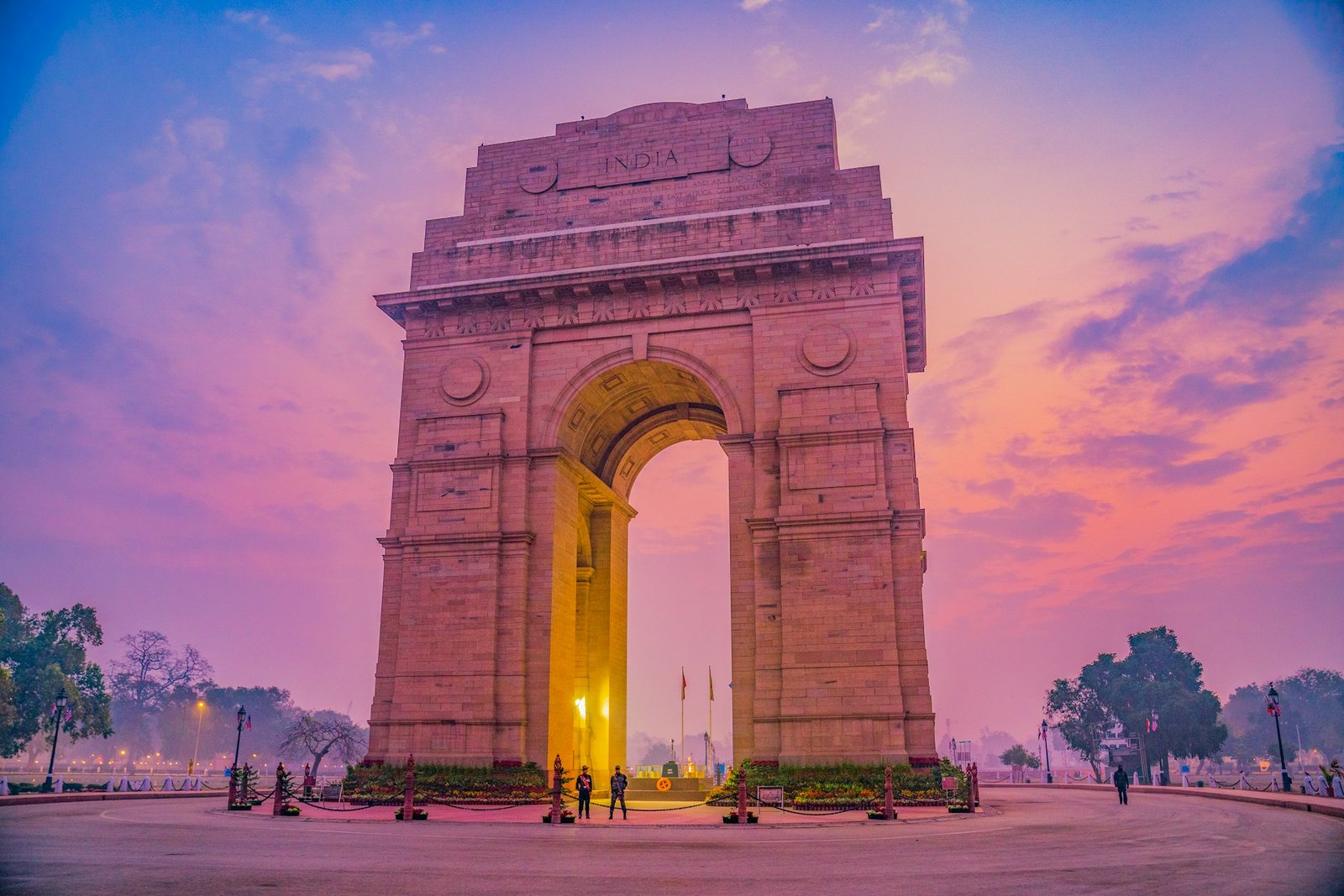
India Gate is a prominent war memorial located at the centre of New Delhi. The surrounding lawns and Kartavya Path create one of the capital’s most impressive public spaces.
The area is popular for evening walks and photography. Security restrictions, parking arrangements and road access may change during official events.
Rashtrapati Bhavan is the official residence of the President of India. Its grand architecture and position at the western end of Kartavya Path make it an important part of New Delhi’s cityscape.
Exterior views can be included during a driving tour. Entry to designated areas requires advance booking and remains subject to official schedules and security restrictions.
The Parliament complex is an important part of India’s administrative centre. Travellers can view the area during a guided or driving tour, subject to security restrictions and road access.
Entry is not normally included with general sightseeing and may require special permission.
Qutub Minar is a UNESCO World Heritage Site and one of Delhi’s finest examples of early Indo-Islamic architecture. The tall red-sandstone tower is surrounded by several important monuments.
Main attractions within the complex include:
Qutub Minar
Quwwat-ul-Islam Mosque
Iron Pillar
Alai Darwaza
Alai Minar
Historic tombs and ruins
The complex is particularly attractive during the morning and late afternoon. Comfortable footwear is recommended because visitors must walk between different structures.
Humayun’s Tomb is an elegant Mughal garden tomb commissioned by Empress Bega Begum. Its symmetrical architecture and charbagh garden influenced later Mughal monuments, including the Taj Mahal.
The surrounding heritage complex also contains Isa Khan’s Tomb and several smaller historic structures.
Lotus Temple is a Bahá’í House of Worship recognised for its flower-shaped white-marble architecture. People of all religions are welcome to enter its prayer hall for silent reflection.
Visitors must maintain silence and follow instructions regarding queues, footwear and photography.
Swaminarayan Akshardham is a large spiritual and cultural complex known for its detailed stone carvings, gardens, exhibitions and scheduled programmes.
Strict security rules apply, and many electronic items may not be permitted inside. Visitors should check the current schedule and prohibited-items policy before travelling.
Gurudwara Bangla Sahib is an important Sikh place of worship near Connaught Place. The complex includes a prayer hall, sacred water tank and community kitchen.
Visitors must cover their heads, remove footwear and follow the customs of the gurudwara. Head coverings are normally available near the entrance.
Lodhi Garden combines landscaped greenery with tombs and architectural remains from the Sayyid and Lodi periods. It is a popular location for morning walks, picnics and heritage photography.
Purana Qila, also known as the Old Fort, is associated with Mughal Emperor Humayun and the Sur ruler Sher Shah Suri. Its massive gateways, archaeological remains and location near a lake make it an interesting heritage attraction.
Agrasen Ki Baoli is a historic stepwell situated near Connaught Place. Its symmetrical stone steps and arched chambers make it a popular photography location.
Located near Qutub Minar, Mehrauli Archaeological Park contains monuments and ruins representing several periods of Delhi’s history.
Important structures include:
Jamali Kamali Mosque and Tomb
Rajon Ki Baoli
Balban’s Tomb
Metcalfe’s Canopy
Historic gateways and ruins
It is suitable for architecture lovers, photographers and travellers interested in lesser-known heritage sites.
Explore the lanes around Chandni Chowk, Jama Masjid and the spice market with a knowledgeable local guide. A guided experience helps visitors understand the neighbourhood’s architecture, traditions and food culture.
A cycle-rickshaw ride through selected lanes of Old Delhi offers a memorable way to experience its markets. Agree on the fare and route before beginning the journey.
Popular shopping areas include:
Chandni Chowk for textiles, jewellery and traditional goods
Khari Baoli for spices and dry fruits
Janpath Market for clothes and accessories
Dilli Haat for Indian handicrafts and regional food
Sarojini Nagar for budget fashion
Khan Market for boutiques, cafés and bookstores
Connaught Place for branded stores and restaurants
Lajpat Nagar for clothes, footwear and traditional wear
Delhi has museums and cultural institutions covering history, art, transport, crafts and the lives of national leaders.
Popular options may include:
National Rail Museum
Gandhi Smriti
National Crafts Museum
Pradhanmantri Sangrahalaya
Nehru Planetarium
National Science Centre
Opening days and exhibition schedules should be checked before visiting.
Guided food walks are available in Old Delhi and other popular areas. These tours are a convenient way to try local dishes while learning about their history.
Travellers should communicate vegetarian preferences, allergies and dietary restrictions in advance.
Connaught Place, India Gate, Kartavya Path and selected cultural venues offer enjoyable evening experiences. Some monuments may also feature illumination or scheduled programmes.
Delhi has several green spaces where visitors can take a break from busy sightseeing routes.
Popular gardens include:
Lodhi Garden
Sunder Nursery
Garden of Five Senses
Nehru Park
Central Park at Connaught Place
Chole bhature is one of Delhi’s most popular meals. It combines spicy chickpeas with large, freshly fried bread and is commonly served with pickle and onions.
Stuffed parathas are widely available across Delhi. Popular fillings include potato, paneer, cauliflower, lentils and mixed vegetables. Paranthe Wali Gali in Old Delhi is particularly well known.
Popular chaat varieties include:
Aloo tikki
Papdi chaat
Golgappa
Dahi bhalla
Raj kachori
Ram ladoo
These dishes combine sweet, spicy, tangy and crispy flavours.
The areas around Jama Masjid are known for kebabs, korma, biryani, nihari and other Mughlai dishes. Vegetarian alternatives are available in many parts of the city.
Butter chicken is one of Delhi’s best-known restaurant dishes. It consists of roasted chicken served in a creamy tomato-based gravy and is generally paired with naan or rice.
Rajma chawal combines red kidney beans cooked in a spiced gravy with steamed rice. It is a popular comfort meal available across Delhi.
Hot jalebi is prepared by frying fermented batter and soaking it in sugar syrup. It is often enjoyed with rabri or warm milk.
Kulfi is a rich frozen dessert available in flavours such as pistachio, saffron, mango and cardamom. Kulfi falooda is another popular variation.
Momos have become a favourite Delhi street snack. Steamed, fried and tandoori versions are available with vegetable, paneer or meat fillings.
Choose busy and well-maintained eateries, avoid uncovered food and drink sealed or filtered water while exploring Delhi’s street-food areas.
 5 Days / 4 Nights
Discover India’s most celebrated travel circuit with our Golden Triangle Tour 5 Days package. Explore Delhi’s historic landmarks, experience the timeless beauty of the Taj Mahal in Agra and discover the royal forts and palaces of Jaipur. This Delhi–Agra–Jaipur tour includes comfortable road transfers, planned sightseeing and sufficient time to enjoy every destination.
Delhi is one of India’s most important transportation hubs. It is well connected by international and domestic flights, long-distance trains, expressways and interstate buses.
The Delhi Metro, private taxis, app-based cabs and local transport services connect different parts of the city.
Indira Gandhi International Airport, with airport code DEL, is the principal airport serving Delhi and the National Capital Region. It operates domestic and international flights through multiple passenger terminals.
Terminal assignments can change according to the airline and operational requirements. Passengers should confirm the terminal number and flight status before leaving for the airport.
The Airport Express Metro connects the Terminal 3 area with New Delhi Railway Station and central Delhi. Terminal 1 is connected through the Delhi Metro’s Magenta Line.
Available airport transport options include:
Airport Express Metro
Delhi Metro
Prepaid taxis
App-based cabs
Private airport transfers
Selected public bus services
Hotel pickup services
Travel time between the airport and central Delhi depends on traffic, terminal and hotel location. Additional time should be allowed during peak office hours and when changing terminals.
Hindon Airport is located in Ghaziabad and may operate selected regional flights. Its flight network remains limited, and it should not be confused with Indira Gandhi International Airport.
Passengers booked from Hindon should check the exact location carefully because it is a considerable distance from central and southern Delhi.
Delhi has several major railway stations. Travellers should check the station name and station code printed on their ticket because these stations are situated in different parts of the city.
New Delhi Railway Station, with station code NDLS, is one of the city’s principal railway terminals. It is located near Paharganj, Ajmeri Gate and Connaught Place.
The station is connected with the Delhi Metro and Airport Express. Passengers should verify whether their train uses the Paharganj side or Ajmeri Gate side when arranging pickup.
Old Delhi Railway Station, with station code DLI, is also known as Delhi Junction. It is situated near Chandni Chowk and the Red Fort area.
Roads around the station can become congested, so travellers should allow additional time before departure.
Hazrat Nizamuddin Railway Station, with station code NZM, serves many trains travelling towards Agra, Mumbai, central India and southern India.
It is convenient for travellers staying in south or central Delhi.
Anand Vihar Terminal, with station code ANVT, serves several trains travelling towards eastern and northern India. It is located in east Delhi near the Delhi–Uttar Pradesh border.
Delhi Sarai Rohilla Railway Station, with station code DEE, operates several trains connecting Delhi with Rajasthan and other regions.
It is particularly relevant for passengers travelling towards Jaipur, Bikaner and Jodhpur.
Delhi is connected with Jaipur, Agra, Chandigarh, Haridwar, Rishikesh, Mathura and other northern Indian destinations through national highways and expressways.
Maharana Pratap Interstate Bus Terminus at Kashmere Gate
Anand Vihar Interstate Bus Terminus
Sarai Kale Khan Interstate Bus Terminus
A private taxi is convenient for airport transfers, local sightseeing and multi-city tours. Journey times can vary because of traffic congestion, roadworks, weather and vehicle restrictions.
Agra is approximately 220–240 kilometres from Delhi. It is famous for the Taj Mahal, Agra Fort, Mehtab Bagh and Itmad-ud-Daulah’s Tomb.
A day trip is possible, although an overnight stay provides a more relaxed sightseeing experience.
Mathura is approximately 175–185 kilometres from Delhi. It is associated with the birthplace of Lord Krishna and attracts spiritual travellers throughout the year.
Important attractions include:
Shri Krishna Janmabhoomi
Dwarkadhish Temple
Vishram Ghat
Local religious markets
Vrindavan is situated near Mathura and is known for Banke Bihari Temple, Prem Mandir, ISKCON Temple and numerous Krishna temples.
Mathura and Vrindavan can be combined in a full-day excursion from Delhi.
Jaipur is approximately 275–290 kilometres from Delhi. The Pink City is known for Amber Fort, City Palace, Hawa Mahal, Jantar Mantar, Jal Mahal and traditional markets.
Delhi, Agra and Jaipur together form India’s popular Golden Triangle tourist circuit.
Neemrana is approximately 120–130 kilometres from Delhi and is known for its heritage fort-palace. It is suitable for a short break, heritage stay or stop while travelling between Delhi and Jaipur.
Alwar is approximately 155–170 kilometres from Delhi.
Attractions in and around the city include:
Bala Quila
City Palace
Moosi Maharani Ki Chhatri
Siliserh Lake
Local markets
Bharatpur is approximately 200–220 kilometres from Delhi and is home to Keoladeo National Park. The wetland reserve is particularly popular with birdwatchers during the suitable season.
Haridwar is approximately 210–225 kilometres from Delhi. The city is known for Har Ki Pauri, temples, the River Ganga and the evening Ganga Aarti.
Rishikesh is approximately 235–250 kilometres from Delhi. It attracts visitors for yoga, meditation, river views, temples, ashrams and seasonal adventure activities.
Kurukshetra is approximately 155–165 kilometres from Delhi and is associated with the Mahabharata.
Important places include:
Brahma Sarovar
Jyotisar
Sannihit Sarovar
Temples and museums
Gurugram is part of the National Capital Region and is known for modern commercial districts, restaurants, shopping centres and entertainment venues. It is situated close to Delhi Airport.
Noida is another major part of the National Capital Region. Travellers may visit it for business districts, shopping, entertainment attractions and exhibitions.
A compact one-day sightseeing itinerary may include:
Raj Ghat
Red Fort
Jama Masjid
Chandni Chowk
India Gate
Kartavya Path
Rashtrapati Bhavan exterior
Qutub Minar
Covering every attraction in one day may not be possible during heavy traffic. The route should be adjusted according to the hotel location, monument timings and traveller preferences.
Red Fort
Jama Masjid
Chandni Chowk
Raj Ghat
Gurudwara Bangla Sahib
Connaught Place
India Gate
Kartavya Path
Rashtrapati Bhavan exterior
Qutub Minar
Mehrauli Archaeological Park, subject to time
Lotus Temple
Humayun’s Tomb
Lodhi Garden
Akshardham Temple or Agrasen Ki Baoli
Travellers with three days can add:
Purana Qila
Sunder Nursery
National Rail Museum
Dilli Haat
Gandhi Smriti
Pradhanmantri Sangrahalaya
Additional shopping or food tour
October to March is generally the most comfortable period for Delhi sightseeing. Winter mornings can be cold and occasionally foggy, while afternoons are usually suitable for outdoor visits.
April to June can be extremely hot. Sightseeing during these months should begin early, with sufficient drinking water and protection from the sun.
July to September brings monsoon weather. Rain can provide relief from the heat but may also cause traffic delays and temporary waterlogging.
Travellers visiting around national events, festivals or public holidays should expect security checks, road diversions and larger crowds near important landmarks.
Keep at least two full days for a balanced Delhi sightseeing tour.
Divide Old Delhi and South Delhi attractions between separate days.
Confirm monument closing days and entry timings before travelling.
Check the correct airport terminal and railway station in advance.
Allow additional time for traffic, security checks and parking.
Use the Delhi Metro when it provides a convenient direct connection.
Wear respectful clothing at mosques, temples and gurudwaras.
Carry a scarf or head covering for religious attractions when required.
Keep personal belongings secure in crowded markets.
Ask permission before photographing local residents.
Carry drinking water, sunscreen and comfortable walking shoes.
Use authorised taxis or verified transport services.
Avoid scheduling too many monuments on the arrival or departure day.
Carry a valid government-issued photo ID.
Check road restrictions during national events and official ceremonies.
Delhi is more than a gateway to northern India. Its layers of history, diverse communities, monumental architecture, spiritual traditions and exceptional food make it a complete destination in its own right.
A thoughtfully planned visit allows travellers to experience both the energy of the modern capital and the stories preserved in its historic neighbourhoods.